
Power Metals confirms high-grade spodumene and tantalum concentrates at Case Lake, Ontario
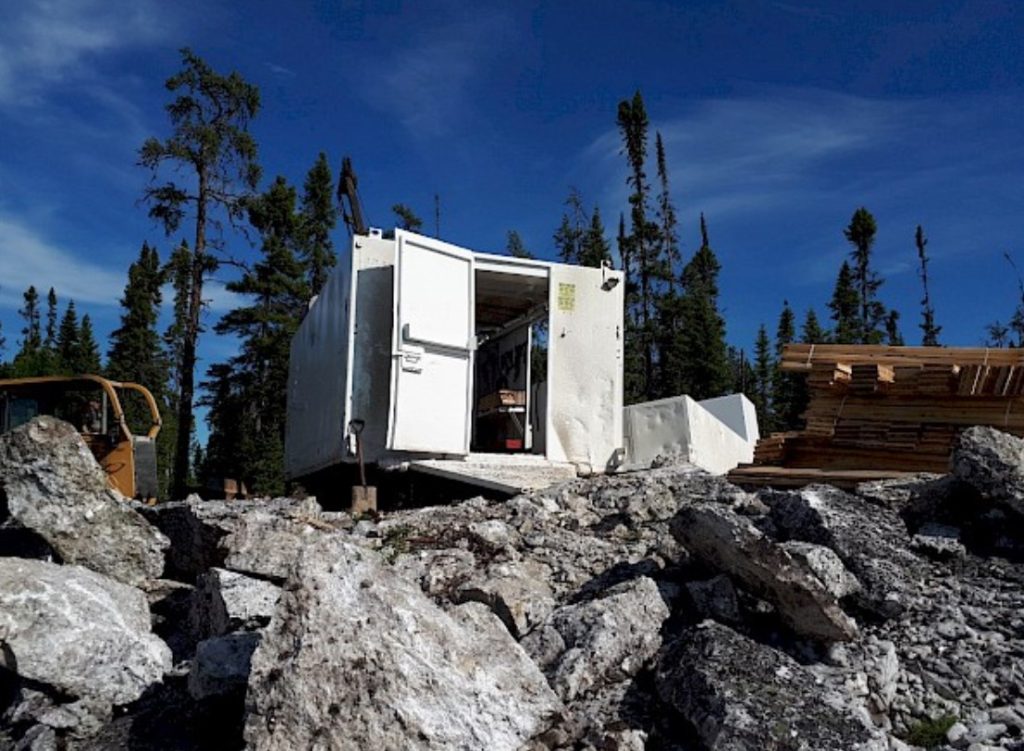
Power Metals Corp. [TSXV: PWM; FRANKFURT: OAA1; OTCQB: PWRMF] provided an update on Metallurgical test work for the 100%-owned Case Lake Cesium Project, northern Ontario with the confirmation of high-grade spodumene and tantalite concentrates.
The latest test work confirms Case Lake as a multi-element project, capable of production high-grade mineral concentrates of cesium alongside tantalum and lithium.
Demonstrating the ability to deliver three high-grade critical minerals from the West Joe resource further cements Case Lake’s position as a world-class asset in Ontario, Canada.
Haydn Daxter, CEO of Power Metals commented: “The recent metallurgical test work confirms Case Lake’s ability to produce three high-grade concentrate minerals – cesium, tantalum and lithium – setting it apart from many other projects in North America.
“With production targeted for 2026, Case Lake is the fourth largest hard rock cesium resource globally that we remained focus on advancing within an efficient timeframe to unlock its full commercial value.”
Johnathan More, Chairman, commented: “I am very pleased with the latest metallurgical test work results from Case Lake. The project continues to stand out as a leading multi-asset in Ontario, with strong potential across all three minerals.
“This latest round of work further strengthens our position as we continue to de-risk and demonstrate the projects capabilities to deliver the world’s fourth hard rock cesium project.”
The company also reported positive metallurgical results from Dense Media Separation (DMS) and Flotation tests on lithium along, with Wet Table (WT) and Magnetic Separation (MS) tests on tantalum from the Case Lake deposit.
The test work produced lithium (LiΓééO) concentrates with grades as high as 7.70%, and low deleterious Iron (FeΓééOΓéâ) content below 0.66%. Tantalum (Ta) concentrates returned grades as high as 12,508 ppm (1.25%).
The company engaged Nagrom the Mineral Processor in Perth, Western Australia to carry out bench-scale test work on representative material from Case Lake. This program utilized DMS and Flotation techniques to concentrate spodumene ore, and WT and MS techniques to concentrate tantalum ore sourced from the West Joe deposit at Case Lake.
Results were subject to an independent review and interpretation by SGS Lakefield, a team with significant expertise in mineral processing and metallurgy in Canada.
The primary objective of this program was to evaluate the effectiveness of conducting DMS and Flotation on spodumene, along with WT and MS on Tantalum from the waste material produced during cesium concentrate production.
The Case Lake Property is located 80 km east of Cochrane, northeastern Ontario, near the Ontario-Quebec border. It comprises 586 cell claims across Steele, Case, Scapa, Pliny, Abbotsford and Challies townships within the Larder Lake Mining Division. The Property is 10km by 9.5km in size with 14 granitic domes.
The Case Lake pegmatite swarm consists of six spodumene dykes known as the North, Main, South, East and Northeast dykes on the Henry Dome, and the West Joe dyke on a new dome, collectively forming mineralization trend that extends for approximately 10km.
Power Metals has completed several exploration campaigns leading to the discovery and expansion of new and historic spodumene bearing LCT pegmatites at Case Lake. The company drilled 23,976 metres of core between 2017 and 2024 at the property.
The Decelles Property contains 247 claims, covering 14,229 hectares of LCT prospective ground near the mining centres of Val-d’├ôr and Rouyn-Noranda, approximately 600km from Montreal.
The Mazerac Property is located approximately 30 km east of Power Metals’ Decelles property near well-established mining camps in the Abitibi region of Canada and is accessible by network of mining-grade forestry roads. The Mazerac property contains 115 claims that cover 6,653 hectares of LCT prospective ground near the mining centre of Val-d’├ôr and Rouyn-Noranda. The regional geology of Mazerac is similar to Decelles where S-type LCT prospective, pegmatite bearing, granites of Decelles Batholith intrude into metasedimentary units of the Pontiac Group. Spodumene and beryl-bearing pegmatites have been reported historically within the Pontiac sub-province in association with S-type garnet-muscovite granite.
Its flagship Case Lake Property in Ontario is a high-grade cesium, lithium and tantalum asset, poised to become one of only four cesium mines globally.