
ReeXploration discovers magnetic features at Eureka Project, Namibia
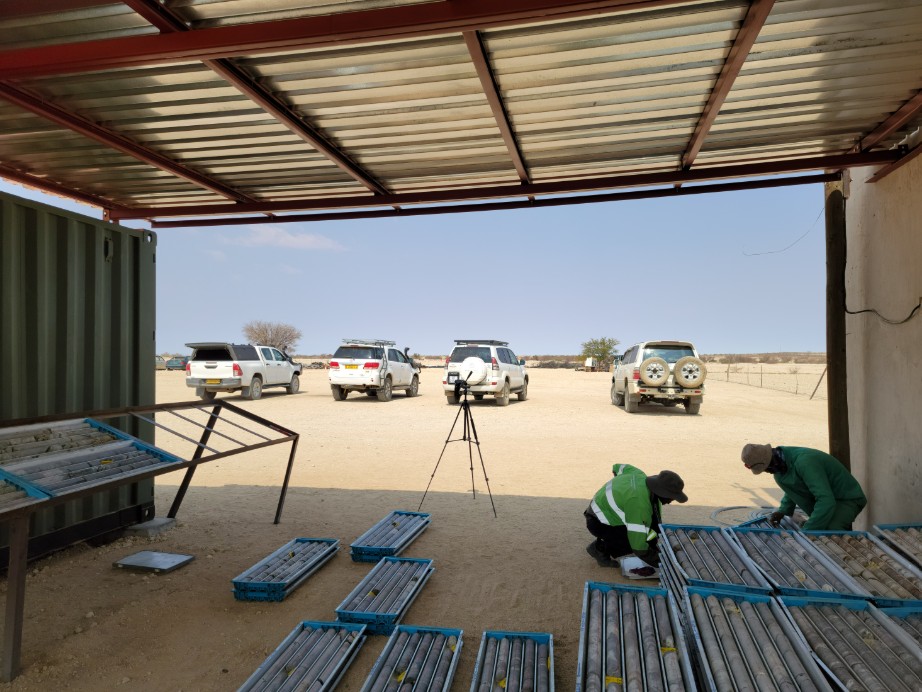
ReeXploration Inc.’s [TSXV: REE; FSE: K2I] detailed investigation of geophysical data has revealed a series of previously untested, large magnetic features at its flagship Eureka project, located in the Erongo region, central Namibia, indicating potential for resource expansion.
Analysis of the new magnetic data suggests the rare-earth element (REE) mineralizing system at the project may be larger than currently defined. The magnetic features may represent deeper intrusive bodies potentially linked to the shallow REE mineralization discovered to date. The project hosts a maiden NI 43-101 inferred mineral resource estimate along with multiple near-surface exploration targets. The REE mineralization is hosted in monazite, the primary REE mineral for neodymium (Nd) and praseodymium (Pr), both critical for low-carbon technologies.
Highlights – New discovery potential at depth: Multiple untested magnetic features identified over a five-kilometre strike length across the northwestern flank of the Eureka Dome. 3-D magnetic data modelling indicates the interpreted bodies begin between 50 to 100 metres below surface.
Magnetic bodies may represent REE-bearing intrusives: The magnetic bodies could be intrusive carbonatites — REE-hosting bodies linked to the known near-surface mineralization. At least one carbonatite phase on the project is known to be highly magnetic, validating the magnetic data as a potential indicator of REE mineralization.
Magnetic bodies align with potential feeder structures: The magnetic bodies converge along key structural lineaments – potential pathways for mineralizing fluids typical of large carbonatite-type REE systems.
Multiple REE targets support strong discovery potential: These newly identified magnetic bodies add to the growing inventory of REE targets on the project, including the large REE soil anomaly identified near the southern flank of the Eureka Dome, as reported in the company’s news release dated October 1, 2025.
Next steps under way: A gravity survey is planned to evaluate the size and density of the magnetic bodies ahead of drilling to test for further REE mineralization and resource expansion potential.
Tolene Kruger, senior geologist for Reexploration, stated: “The integration of surface geology with magnetic data modelling reveals structural complexity beneath Eureka that points to a potentially larger mineralizing system. These interpreted magnetic bodies could represent feeder zones to the rare-earth mineralization discovered at surface. Further characterizing their nature through upcoming ground gravity surveys will be an important step in refining targets ahead of drill testing.”
Chris Drysdale, interim CEO, commented: “Eureka continues to stand out as a strategically positioned rare-earth project — with favourable metallurgy, a strong jurisdiction and growing potential scale. The newly defined magnetic targets strengthen our view that Eureka hosts a much larger rare-earth system — a goal well aligned with the global drive to secure sustainable NdPr supply.”
At Eureka, early metallurgical testing has confirmed that known REE mineralization is hosted in monazite-bearing carbonatite, a favourable mineralogy recognized for low impurities, low radioactivity and compatibility with Western processing standards.
Testwork has already produced a concentrate with approximately 60% TREO (total rare earth oxides) after gravity and magnetic separation, confirming processability and providing key early stage technical derisking. Neodymium (Nd) and praseodymium (Pr) are the primary drivers of value, essential for permanent magnets used in EVs (electric vehicles), renewable energy systems and defence technologies.
Global demand for NdPr oxides continues to accelerate as governments prioritize secure and sustainable critical-mineral supply chains.
Namibia is ranked among Africa’s most attractive mining jurisdictions and offers a stable, infrastructure-rich and regulation-transparent environment for rare-earth development.
Interpretation of the high-resolution ground magnetic data set from 2022 suggests potential for a more extensive REE system within the 13-by-six-km Eureka Dome. The magnetic bodies (MA-1 to MA-5; 50 nT — greater than 150 nT above background) defined by 3-D magnetic modelling lie coincident with, or adjacent to, major interpreted structures that could have acted as conduits for carbonatite intrusions.
Together, these data sets point to significant unexplored potential at relatively shallow depth, related to the existing at-surface dike-hosted REE mineralization hosting a maiden National Instrument 43-101 inferred mineral resource estimate.
Reexploration is planning to conduct a gravity survey across the magnetic anomalies (MA-1 to MA-5). Survey specifications are to be confirmed. The survey will generate a density model to help determine if the magnetic bodies have any significant density association. The magnetics together with the gravity data will provide essential geometric information and physical properties of the magnetic features and refine targets for drilling. The company is engaging with various qualified service providers to conduct the survey work.
The current maiden inferred mineral resource estimate (MRE) for the Eureka project includes 310,000 tonnes at 4.8 per cent TREO (including 0.7% Nd plus Pr oxides) from the initial 19 drill holes (613 metres) completed across zones 1 to 3. The MRE was prepared by SRK Consulting (U.K.).
The 2022 ground magnetic survey was carried out by Remote Exploration Services Pty. Ltd. (RES). A total of 1,151.5 line-km of high-resolution ground magnetic survey data were collected along a line spacing of 25 metres at an azimuth of 340 degrees.
Reexploration’s flagship Eureka project in central Namibia hosts rare-earth element (REE) mineralization in monazite, rich in NdPr magnet metals, with bench-scale testing confirming production of a clean, Western-standard concentrate.
Resource World Magazine Inc. has prepared this editorial for general information purposes only and should not be considered a solicitation to buy or sell securities in the companies discussed herein. The information provided has been derived from sources believed to be reliable but cannot be guaranteed. This editorial does not take into account the readers investment criteria, investment expertise, financial condition, or financial goals of individual recipients and other concerns such as jurisdictional and/or legal restrictions that may exist for certain persons. Recipients should rely on their own due diligence and seek their own professional advice before investing.