
Toogood Gold posts 76.89 g/t gold and defines 8.5-km high-grade gold trend at Toogood Gold Project, Newfoundland
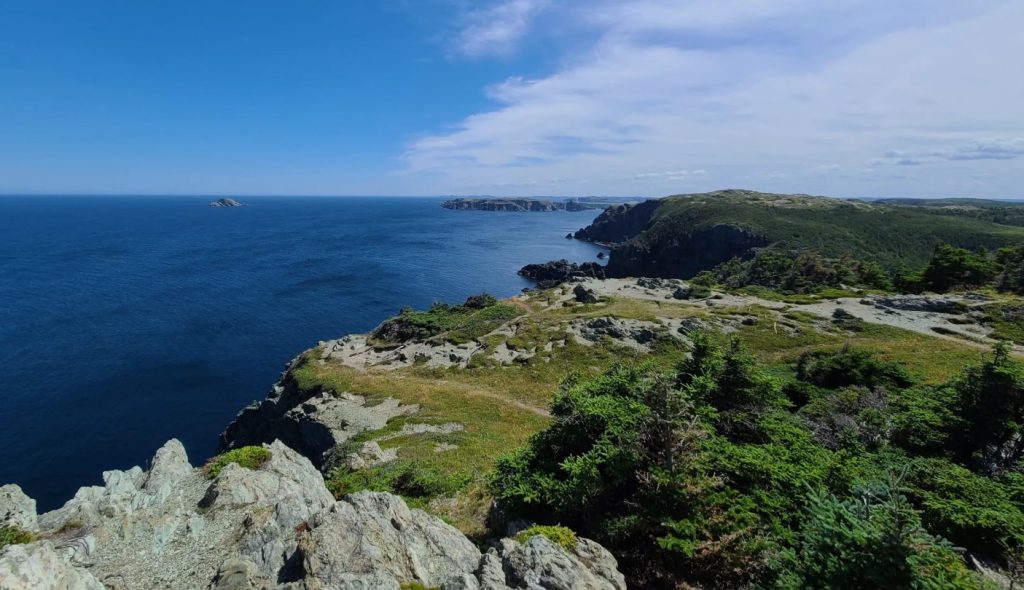
Toogood Gold Corp. [TSXV: TGC] reported final results from its Phase 2 surface exploration program at the 100%-owned Toogood Gold Project, located on New World Island, Newfoundland.
Highlights: High-grade gold up to 76.89 g/t confirmed, with additional results of 4.88 g/t and 4.49 g/t Au confirmed along the 8.5-km Shoreline gold trend, demonstrating district-scale potential.
Additional high-grade mineralization is confirmed at key target areas: 34.50 g/t, 3.09 g/t and 2.93 g/t Au from quartz veins at Chimo, Vic, and Hank targets.
Multiple new kilometre-scale gold corridors outlined in the NE Block: 4 km Burnt Arm Trend, 2 km Western Trend and 1 km Eastern Trend.
Strong alignment between gold mineralization and major structural controls supports a scalable, structurally controlled gold system.
Over 650 rock and soil samples collected, significantly advancing geological understanding and target definition. Multiple high-priority drill targets defined, with work advancing toward initial drill testing.
Phase 2 results continue to demonstrate the scale and prospectivity of the Toogood Gold Project, with high-grade gold confirmed along an 8.5-km-long trend and multiple kilometer-scale soil anomalies defined from regional sampling,” stated Colin Smith, CEO of Toogood Gold. “The strong alignment between surface mineralization, coherent geochemical signatures, and well-defined structural controls, including key lithological contacts and district-scale faults, provides a robust targeting framework to define and advance a growing pipeline of high-quality drill target corridors.”
Phase 2 exploration at the Toogood Gold Project (Q4, 2025) integrated detailed structural mapping, prospecting, and soil sampling, significantly advancing the geological model. A total of 340 rock and 315 soil samples were collected, identifying new high-grade gold occurrences and multiple kilometre-scale gold-in-soil anomalies.
Phase 2 mapping has materially improved the company’s understanding of structural controls on gold mineralization. Work on the project has identified at least two semi-continuous mineralized zones developed along the sheared northern margin of the regionally extensive Mélange Complex.
Mineralization is characterized by stockwork quartz-carbonate veining within altered and brecciated volcaniclastic rocks, commonly associated with sulphidic black shales. Key controls on mineralization include structural convergence zones where multiple foliations, shears, and faults intersect, resulting in thickened and higher-grade mineralized zones; reactive lithological contacts, particularly between mafic-intermediate volcaniclastic rocks and black shales; and local enhancement of mineralization where intermediate porphyry dikes and sills intersect these favourable horizons.
These observations support a structurally controlled gold mineralizing system at both regional and local scales, underscoring the potential for significant gold mineralization across the Project.
Results from Phase 2 have defined multiple high-priority, structurally coherent target corridors in the NE Block, with strong spatial coincidence between gold-in-soil anomalies and interpreted structural controls.
The company intends to advance these corridors toward drill testing, with current work focused on refining and prioritizing high-confidence targets along the Burnt Arm Fault corridor and parallel structures.
Planned 2026 work will include infill and regional soil sampling to better delineate anomalies and expand coverage into unsampled areas; structural mapping and prospecting along auriferous corridors; and drill target generation and ranking.
This integrated approach is designed to efficiently convert surface anomalies into high-confidence, scalable drill targets and support systematic evaluation of the Project’s emerging gold corridors.
Toogood Gold has two core areas of focus: the Table Mountain Project in Nevada, a large, undrilled low-sulphidation epithermal system with extensive surface alteration and multiple mineralized vein exposures; and the 100%-owned, district-scale Toogood Gold Project (164 km²) in Newfoundland, a highly prospective and underexplored gold district with multiple target areas and demonstrated gold prospectivity.