
CanAlaska Uranium posts winter drilling results from West McArthur Project, Saskatchewan
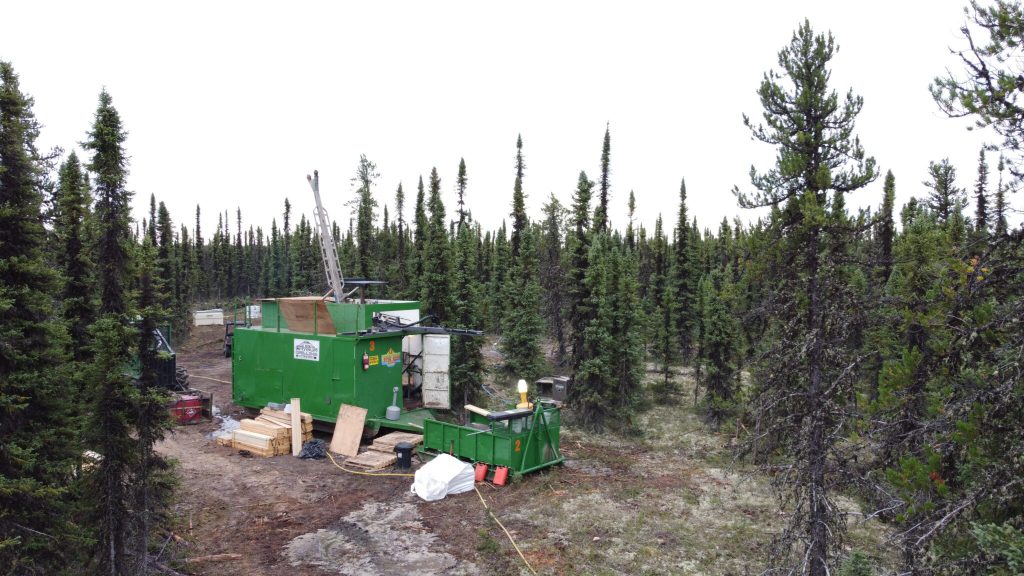
CanAlaska Uranium Ltd. [TSXV: CVV; OTCQX: CVVUF; FSE: DH7] reported that it has completed the winter drill program at the Pike Zone on the West McArthur Joint Venture Project in the eastern Athabasca Basin, Saskatchewan.
The winter program was focused on continued step-outs to the southwest and northeast of the currently defined high-grade mineralized footprint of the Pike Zone. During the program, the company successfully stepped out 350 metres west and 350 metres east from previous drilling, intersecting continued strong alteration, structure, graphitic host stratigraphy, and multiple drill fences with unconformity-associated and basement-hosted uranium mineralization.
The continuation of the large-scale hydrothermal system along trend in both directions from the high-grade Pike Zone highlights the continued potential for additional pods of high-grade mineralization and the requirement for continued systematic evaluation in both directions along the C10S corridor.
Cory Belyk, CEO, commented, “I am very pleased with outcomes from the winter exploration program on CanAlaska’s Pike Zone discovery. The identification of unconformity-related uranium mineralization over one kilometre and remaining open along strike is an indication of continuity of the depositional processes of the Pike Zone. The intensity of alteration associated with this unconformity mineralization is strong, specifically to the southwest, which gives the team confidence to continue our systematic drill-testing approach looking for the next ‘pearl’ of high-grade uranium mineralization. With more than $30 million in the treasury, CanAlaska is fully funded for the planned three-drill summer program scheduled to commence in June.”
Nathan Bridge, VP Exploration, commented, “The Pike Zone hydrothermal system continues to display all the right indicators for its potential to host multiple pods of high-grade uranium mineralization. Through our winter program, we demonstrated continued evidence for strong alteration, multi-episodic post-Athabasca structure in the sandstone and basement, and uranium mineralization associated with the unconformity target as we stepped out from the high-grade core of the Pike Zone. The team is very encouraged that the hydrothermal system remains open and fertile along strike in both directions and are ready to get back to our methodical results-driven drill testing strategy in June.”
The 2026 winter drill program on the West McArthur project is now complete. The program consisted of 24 unconformity tests, 10 of which contained uranium mineralization. The primary objective of the winter program was continued step-outs to the southwest and northeast of the currently defined high-grade mineralized footprint of the Pike Zone. The program was designed to continue evaluation for additional pods of high-grade uranium mineralization within the associated large hydrothermal alteration system.
During the program, the company successfully expanded the hydrothermal alteration footprint along the C10S corridor 350 metres to the southwest and 350 metres to the northeast from the 2025 summer drill program. The winter drill program was successful in identifying key structural controls and alteration vectors, including bleaching, clay, chlorite, and sooty pyrite associated with sandstone and basement fault structures at the unconformity along strike in both directions.
In addition, the company intersected uranium mineralization associated with these structures and alteration zones on multiple drill fences moving both to the northeast and southwest of the high-grade Pike Zone footprint, highlighting the continued potential for additional mineralized pods within the hydrothermal system.
A significant result from the winter drill program is the discovery of new high-grade unconformity-associated uranium mineralization approximately 250 metres northeast of the high-grade Pike Zone core, highlighted by drillhole WMA101-02 which intersected 5.2 metres at 3.10% eU3O8.
As a result of the winter drill program, the hydrothermal system associated with the unconformity target area along the C10S corridor has now been defined over 1.3 km strike length, with over one km strike length containing uranium mineralization. The target corridor remains sparsely tested over 530 metres strike length to the northeast and 630 metres strike length to the southwest from the 140-metre-long high-grade core of the Pike Zone.
Results from the winter drill program show similar continued hydrothermal alteration intensity, styles, and types as those that are observed in direct association with the Pike Zone near the most significant high-grade intersections drilled to date. The winter drill program highlights the requirement for continued systematic evaluation for additional high-grade pods of unconformity-associated uranium mineralization in both directions along the C10S corridor.
As a secondary goal, two drillholes were completed to evaluate stacked geophysical conductor anomalies identified from the 2025 geophysical survey directly to the south of the Pike Zone. These drillholes identified multiple stacked and faulted parallel graphitic packages associated with bleaching and chlorite alteration southeast of the Pike Zone.
The company also reported that it has completed the ground-based electromagnetic survey to investigate the extension of the Epp Lake conductor on to the West McArthur Project. A modern Stepwise Moving Loop Time Domain Electromagnetics (SWML-TDEM) survey, using the same survey design that led to the discovery of the Pike Zone, was completed to advance this part of the West McArthur Project.
Preliminary results from the geophysical survey have identified a series of stacked conductor anomalies in a northeasterly trend coincident with a regional magnetic low. The company is currently working with Convolutions Geoscience to process the results of the survey and evaluate the next steps. The SWML-TDEM survey was completed by Abitibi Geophysics.
As part of the approved $15 million 2026 exploration program and budget, a summer drilling program is planned. The company will provide details about the planned summer drilling program, which is anticipated to begin in June, in the coming weeks.
Geochemical assay results from the winter portion of the 2026 exploration program are pending.
The West McArthur Project, a Joint Venture with Cameco Corp. [TSX: CCO; NYSE: CCJ], is operated by CanAlaska, which holds an 88.89% ownership in the project. The 2026 exploration program is being co-funded by Cameco and CanAlaska under the Joint Venture.
Drillhole Details – Northeastern Step-Outs from Pike Zone: During the winter exploration program, eleven drillholes were completed stepping out to the northeast from Pike Zone. Five drillholes in this target area contained uranium mineralization, three of which were previously reported.
The lower portion of the sandstone column of the drillholes in this target area is strongly bleached with associated limonite alteration. Fault zones in the lower sandstone are characterized by broken and blocky core associated with quartz dissolution resulting in locally poor core recovery. Near the unconformity contact between the sandstone and the basement, the mineralized drillholes have sooty pyrite alteration as a halo around the uranium mineralization.
The basement of the drillholes in this target area is bleached, clay, and chlorite altered with frequent quartz-carbonate veins as a halo associated with the target graphitic stratigraphy and re-activated fault zones. WMA101-03 contains disseminated unconformity-associated and vein-controlled basement uranium mineralization.
WMA101-06 contains vein-controlled basement uranium mineralization. The last drillhole completed during the program in this target area, WMA106, was located hanging wall to the intended target and confirmed continuity of the graphitic package and hydrothermal alteration at depth.
Drillhole Details – Southwestern Step-Outs from Pike Zone: During the winter exploration program, 11 drillholes were completed stepping out to the southwest from Pike Zone. Five drillholes in this target area contained uranium mineralization, one of which was previously reported.
The lower portion of the sandstone column of the drillholes in this target area is strongly bleached with associated limonite alteration. Fault zones in the lower sandstone are characterized by broken and blocky core associated with quartz dissolution and strong clay replacement resulting in locally poor core recovery.
Near the unconformity contact between the sandstone and the basement, the mineralized drillholes have sooty pyrite alteration as a halo around the uranium mineralization. The basement of the drillholes in this target area is bleached, clay, and chlorite altered with frequent quartz-carbonate veins as a halo associated with the target graphitic stratigraphy and re-activated fault zones. WMA098-04 contains disseminated unconformity-associated uranium mineralization. WMA100-03 and WMA105 contain vein-controlled basement uranium mineralization. WMA104 contains unconformity-associated uranium mineralization in an interval of lost core due to strong basal sandstone alteration.
Drillhole Details – Hanging Wall Conductor Test Around Pike Zone: During the winter program, two drillholes were completed to evaluate the stacked geophysical conductor anomalies identified from the 2025 geophysical survey across strike directly to the south of the Pike Zone, one of which was previously reported. WMA102 intersected a hanging wall graphitic package with a fault 140 metres below the unconformity contact. The surrounding pelitic rocks are chloritized and bleached with frequent quartz-carbonate veins. WMA078, which was a follow up to WMA102, intersected alteration and structure in the lower portion of the sandstone column followed by multiple re-activated graphitic fault zones in the basement. The drillholes in this target area identified multiple stacked and faulted graphitic packages associated with bleaching and chlorite alteration south of the Pike Zone that upgrade the stacked geophysical conductor anomaly targets along strike on the trend.
Diamond drill hole WMA098-04 returned 0.5 metres at 0.20% eU3O8. WMA100-03 returned 0.3 metres at 0.19% eU3O8 and 1.3 metres at 0.15% eU3O8, 0.7 metres at 0.27% eU3O8.
WMA101-06 returned 1.3 metres at 0.16% eU3O8. WMA104 returned 0.9 metres at 0.28% eU3O8. WMA105 returned 0.2 metres at 0.14% eU3O8.
All assay drill core samples from the program, completed as NQ-sized core, were shipped to the Saskatchewan Research Council Geoanalytical Laboratories (SRC) in Saskatoon, Saskatchewan in secure containment for preparation, processing, and multi-element analysis by ICP-MS and ICP-OES using total (HF:NHO3:HClO4) and partial digestion (HNO3:HCl), boron by fusion, and U3O8 wt% assay by ICP-OES using higher grade standards. Assay samples are chosen based on downhole probing radiometric equivalent uranium grades and scintillometer (SPP2 or CT007-M) peaks.
All reported depths and intervals are drill hole depths and intervals, unless otherwise noted, and do not represent true thicknesses, which have yet to be determined.
CanAlaska is a leading explorer of uranium in the Athabasca Basin of Saskatchewan, Canada. With a project generator model, the company has built a large portfolio of uranium projects in the Athabasca Basin. CanAlaska owns numerous uranium properties, totaling approximately 500,000 hectares, with clearly defined targets in the Athabasca Basin covering both basement and unconformity uranium deposit potential.
The company has recently concentrated on the West McArthur high-grade uranium expansion with targets in 2024 and 2025 leading to significant success at Pike Zone. Fully financed for the 2026 drill season, CanAlaska is focused on uranium deposit discovery and delineation in a safe and secure jurisdiction.
Resource World Magazine Inc. has prepared this editorial for general information purposes only and should not be considered a solicitation to buy or sell securities in the companies discussed herein. The information provided has been derived from sources believed to be reliable but cannot be guaranteed. This editorial does not take into account the readers investment criteria, investment expertise, financial condition, or financial goals of individual recipients and other concerns such as jurisdictional and/or legal restrictions that may exist for certain persons. Recipients should rely on their own due diligence and seek their own professional advice before investing.