
Gold X2 Mining drills 50.85 metres of 2.18 g/t gold in Moss Main Zone grade control drilling program, Ontario
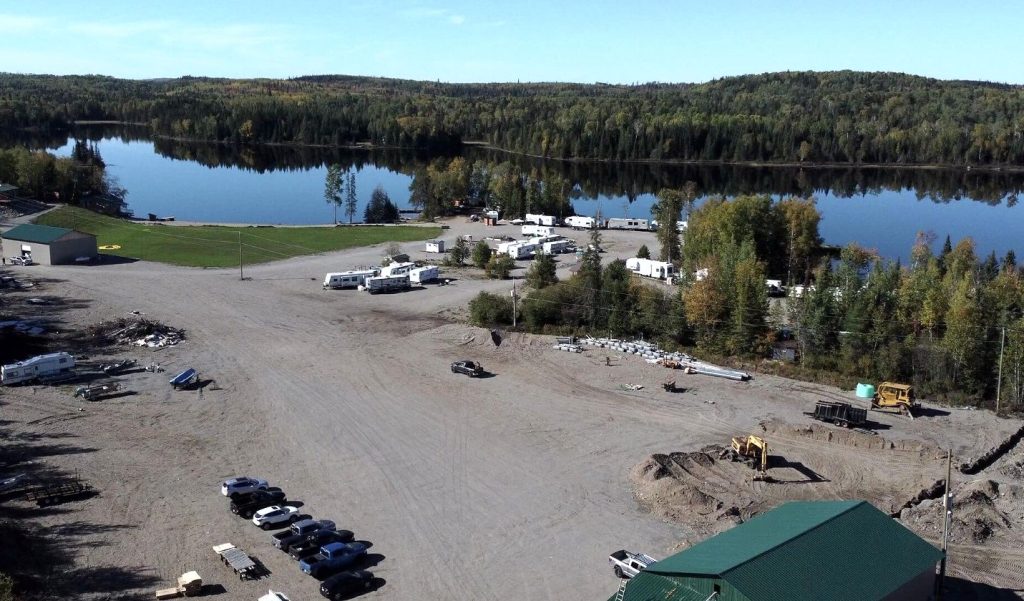
Gold X2 Mining Inc. [TSXV: AUXX; OTCQB: GSHRF; FSE: 8X00] reported the first batch of assay results from its ongoing grade control drill program at the Moss Gold Project in Northwest Ontario, Canada. The first batch of assay results targeted marginal to core shears in the Main Zone with a total of 18 shallow holes reported. The purpose of the 12.5 metre by 12.5 metres spaced grade control drill program is to investigate the short-distance behaviour of gold mineralization to determine the drill spacing required to upgrade the resource from inferred to indicated category.
Additionally, the drill core will provide the required volume of samples for the upcoming feasibility level metallurgical studies. Finally, the tight spaced drilling provides mining-level precision that will derisk the Mineral Resource Estimate.
Michael Henrichsen, CEO of Gold X2 commented, “We are pleased with the initial results of the first 18 drill holes from the Moss Main grade control program. Notably, gold grades are generally higher than those predicted in our current resource model and we look forward to the potential continuation of this pattern as we receive additional results. Equally important, the observed continuity of shear zones supports our current geological model, currently being updated by G Mining Services, and this alignment reinforces our confidence in the Moss Gold Project’s potential.”
Highlights: Sixty-one short drill holes have been completed as part of close-spaced grade control drill program designed to investigate the short-distance behaviour of gold mineralization at the Main Zone.
Results from the first 18 holes have confirmed the continuity of high-grade mineralization within individual shear zones modelled in the Main Zone. The top drill intercepts include 49.85m of 1.54 g/t Au from 0.7m in MMD-25-201, including 36.3m of 2.03 g/t Au from 0.7m, and 16m of 3.14 g/t Au from 76.0m; 50.85m of 2.18 g/t Au from 1.15m in MMD-25-203; 41m of 1.71 g/t Au from 5.0m in MMD-25-207; 57.5m of 1.26 g/t Au from 4.6m in MMD-25-209; 32m of 1.55 g/t Au from 7.0m in MMD-25-211; 64.1m of 0.96 g/t Au from 35.85m in MMD-25-214; 20.25m of 2.73 g/t Au from 147.0m in MMD-25-215, including 9.7m of 5.35 g/t Au from 157.55m and 22.7m of 2.21 g/t Au from 168.0m in MMD-25-217.
In preparation for the infill drilling campaign, two grade control drilling programs were designed, one at each the Main and QES zones. The Main Zone pattern covers an area that is 100 metres along strike, 80 metres across strike and 170-190 metres deep. Drill holes are spaced in a 12.5-metre diamond-shaped pattern.
The logging data from the 18 holes reported here highlights reasonable continuity of the lithological and shear domains supporting the resource estimation process. Drilling intersected the typical diorite complex across most holes, characterized by 20-30-metre-wide units of varying composition, ranging from more mafic diorites to more felsic granodiorites. The exception is the most northern holes which collared into a 15-25m wide dacite volcanic unit.
Details of the Moss Gold Project Mineral Resource Estimate are provided in a technical report with an effective date of January 31, 2024, prepared in accordance with NI 43-101 standards.
The company’s current focus is the advanced stage 100% owned Moss Gold Project which is positioned in Ontario, Canada, with direct access from the Trans-Canada Highway, hydroelectric power near site, supportive local communities and skilled workforce. The company has invested over $75 million of new capital and completed approximately 100,000 metres of drilling on the Moss Gold Project, which, in aggregate, has had over 255,000 metres of drilling.
The 2024 updated NI 43-101 mineral resource estimate (MRE) has expanded to 1.54 million ounces of Indicated gold resources at 1.23 g/t Au, contained within 38.96 million tonnes and 5.20 million ounces of Inferred gold resources at 1.11 g/t Au, contained within 146.24 million tonnes.
The MRE only encompasses 3.6 km of the 35+ km mineralized trend, remains open at depth and along strike and is one of the few remaining major Canadian gold deposits positioned for development in this cycle.
Resource World Magazine Inc. has prepared this editorial for general information purposes only and should not be considered a solicitation to buy or sell securities in the companies discussed herein. The information provided has been derived from sources believed to be reliable but cannot be guaranteed. This editorial does not take into account the readers investment criteria, investment expertise, financial condition, or financial goals of individual recipients and other concerns such as jurisdictional and/or legal restrictions that may exist for certain persons. Recipients should rely on their own due diligence and seek their own professional advice before investing.