
Manganese X reports positive Phase 2 ore-sorting results at Battery Hill pilot program, New Brunswick
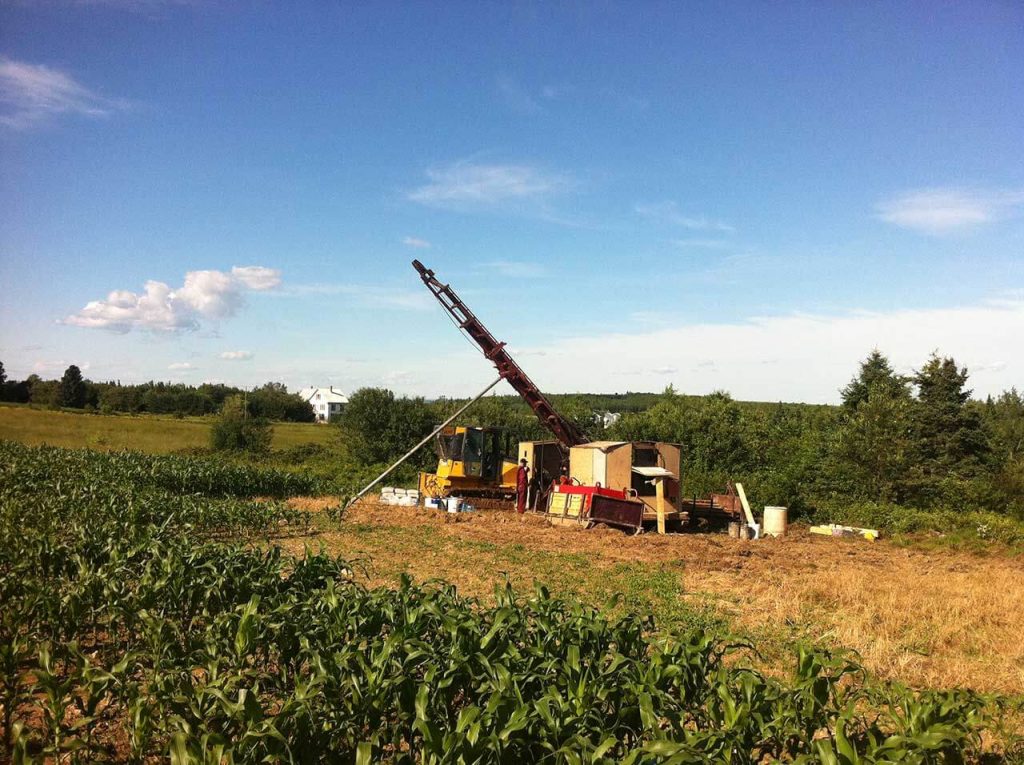
Manganese X Energy Corp. [TSXV: MN; FSE: 9SC; TRADEGATE: 9SC; OTCQB: MNXXF] reported highly positive Phase 2 ore-sorting results, demonstrating an 80% increase in mill feed grade in its large scale Battery Hill pilot program, managed by ABH Engineering.
An 80% increase in mill feed grade means that, after ore-sorting, the material sent to the mill contains 80% more manganese per tonne than the original mined material.
The ore-sorting program was performed at RADOS Technologies lab in South Africa where over 400kg of rock from the company’s Battery Hill manganese deposit near Woodstock, New Brunswick, was processed. The sample was split into two size fractions and tested using full-scale production equipment. Through ore sorting, waste rock was effectively removed, pre-concentrating the rock before further processing.
This ore-sorting process is also projected to deliver significant capital expenditure (CAPEX) and operating cost (OPEX) savings, potentially supporting a strong outcome in the Company’s upcoming PFS.
Results confirm that Battery Hill material is highly amenable to ore-sorting, enabling substantial improvements in feed grade while providing significant potential capital and operating costs savings.
The study was conducted in preparation for the Company’s PFS, scheduled to commence in Q3 2025. Manganese X is having ongoing discussions with lead consultants regarding the integration of ore-sorting into the Battery Hill PFS program.
CEO Martin Kepman commented, “We are highly encouraged by the results of this large-scale pilot program, which confirm the economic potential of the ore-sorting technology we are employing. These findings strongly support the viability of integrating this process into our operations. By increasing mill feed grade, ore sorting is projected to positively impact CAPEX, OPEX, and production cost per tonne.”
He continued, “With higher-grade feed, a smaller facility can produce more metal, while the ability to create low-grade stockpiles enables very high upgrade ratios and maximizes resource utilization. Potential benefits also include improved project NPV and IRR, reduced energy and water consumption, expanded resources through cut-off grade reduction, and decreased tailings storage requirements – along with the associated reduction in environmental impact.”
Brent Hilscher, VP of Mineral Processing at ABH Engineering, added, “The Manganese X results are an excellent example of what we call a ΓÇÿclean sort’ or ΓÇÿsharp separation.’ The high-grade rock can be easily concentrated with very high recovery rates. The impact of higher mill feed grade on project economics can be profound.”
Ore-Sorting Details: Results are consistently positive between 10mm and 100mm feed sizes; Pilot plant used a large sample over 400kg; Testing was conducted on full size production equipment, not lab scale.
Potential mill feed grades of 10% to 15% manganese (Mn) were achievable, with full scale production equipment. Potential to stockpile medium grade rock by XRF system in single stage three-way split.
Manganese X’s mission is to advance its Battery Hill project into production, thereby becoming the first public actively traded manganese mining company in Canada and US to commercialize EV compliant high purity manganese, potentially supplying the North American supply chain.
The company intends on supplying value-added materials to the lithium-ion battery and other alternative energy industries, as well as striving to achieve new carbon-friendly more efficient methodologies, while processing manganese at a lower competitive cost.