
Sokoman Minerals triples claim coverage at Treasure Island Project, Newfoundland
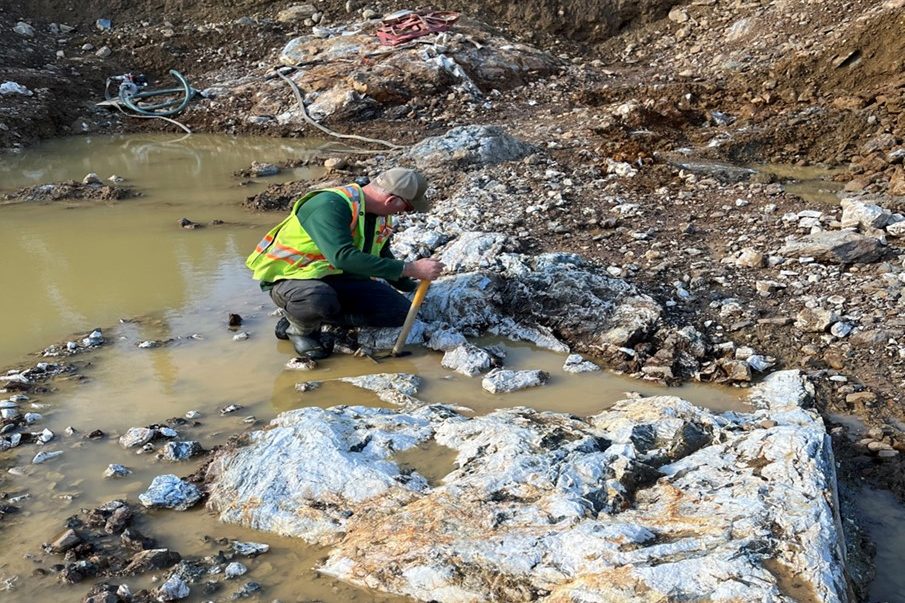
Sokoman Minerals Corp. [TSXV: SIC; OTCQB: SICNF] has secured the right to acquire mineral licences covering 41,150 hectares along the Valentine Lake fault at the Treasure Island Project, Newfoundland, which also hosts Canada’s newest producing gold mine operated by Equinox Gold Corp. The acquisition will position Sokoman as the largest landholder by strike length and area along the highly prospective regional fault system.
Highlights: The company’s mineral licence holdings along the Valentine Lake fault will expand to over 65 km of strike length and an area totalling 58,775 hectares.
This increase more than doubles the prospective strike length while tripling the area of its mineral licences.
The Valentine gold mine, operated by Equinox Gold, started processing ore in August, 2025, and, with the first gold pour in Q3 2025, will be Canada’s newest large-scale gold mine with an initial mineral resource of four million ounces. The 2022 feasibility study on the Valentine gold mine outlined production of 195,000 ounces of gold per year.
The Valentine gold mine is geologically situated along the Valentine Lake fault zone, a large-scale regional fault structure believed to play an integral role in the formation of the deposit.
Through two separate claim acquisition agreements and staking, the company will transform its Moosehead and Crippleback claim groups to form the Treasure Island project.
The Treasure Island project contains the largest mineral licence package and longest strike length along the Valentine Lake fault and positions Sokoman as the dominant explorer along strike of the Valentine gold mine.
The 100%-owned Treasure Island project will be host to the most advanced gold zone outside of the Valentine gold mine at the Moosehead zone, which has over 135,000 metres of drilling completed to date, including high-grade highlights of 70.3 g/t gold over 9.05 metres (MH-18-39); 45.0 g/t Au over 11.9 m (MH-18-01); 12.5 g/t Au over 39.6 m (MH-22-463); 69.5 g/t Au over 4.85 m (MH-24-649); and 56.6 g/t Au over 5.55 m (MH-21-342).
The district-scale Treasure Island project covers a similar geological environment as the Moosehead zone and includes several other known gold showings and occurrences with similar mineralogical characteristics.
Outside of the 2-km strike length of the Moosehead zone, very limited exploration and drilling have occurred along the remaining 63 km of the Treasure Island project, which remains open for discovery.
“We believe the recent claim acquisitions are fundamentally transforming the company’s exploration strategy to take a district-scale approach while remaining focused on our core mineralized zones at Moosehead. With a dominant position along the Valentine Lake fault, we believe the company can apply its Newfoundland expertise to make other high-grade gold discoveries,” said Denis Laviolette, executive chairman, CEO and a director.
The company also reports that Dr. James Adams, PhD, CFA, has stepped down from the board of directors of Sokoman but will remain with the company as a member of the newly formed advisory board.
The company welcomes Kevin Keats as a member of the advisory board. The Keats family was awarded the Bill Dennis Prospector of the Year Award in 2007 for its collective contributions to the mineral industry in Newfoundland and Labrador and abroad.
In connection with the mineral claim acquisition agreements and subject to receipt of all required regulatory approval, the company will issue 4.5 million common shares and make cash payments totalling $50,000.
Resource World Magazine Inc. has prepared this editorial for general information purposes only and should not be considered a solicitation to buy or sell securities in the companies discussed herein. The information provided has been derived from sources believed to be reliable but cannot be guaranteed. This editorial does not take into account the readers investment criteria, investment expertise, financial condition, or financial goals of individual recipients and other concerns such as jurisdictional and/or legal restrictions that may exist for certain persons. Recipients should rely on their own due diligence and seek their own professional advice before investing.