
CanAlaska Uranium conducting ground-based geophysical program at Waterbury South Project, Saskatchewan
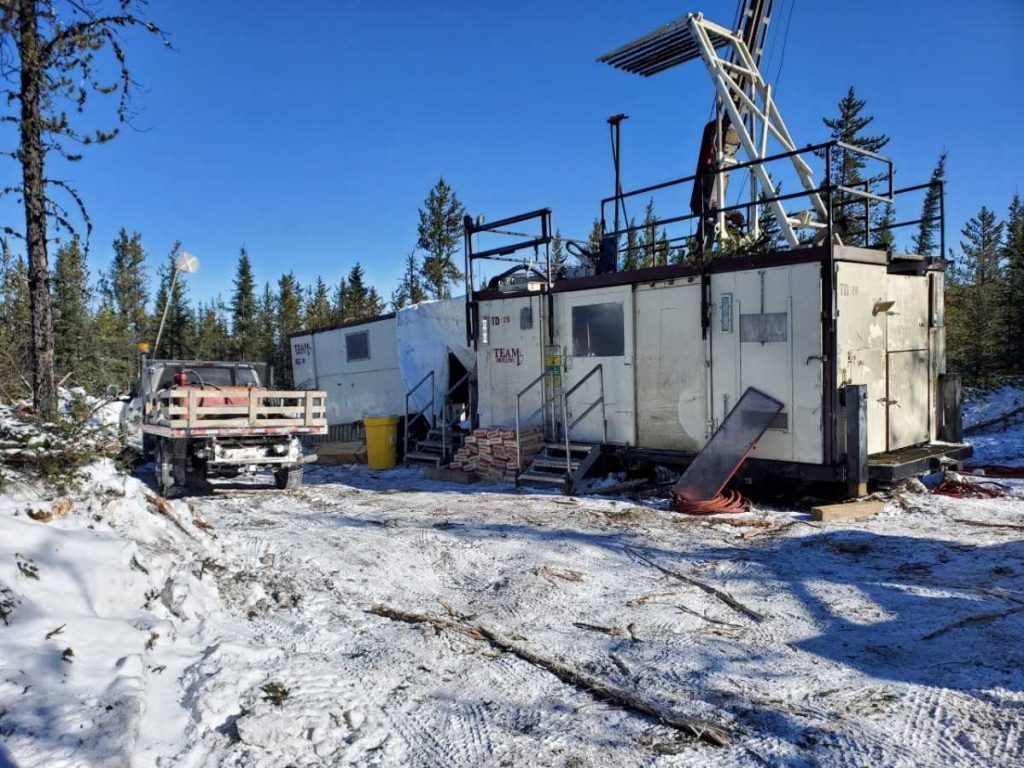
CanAlaska Uranium Ltd. [TSXV: CVV; OTCQX: CVVUF; FSE: DH7] reported the start of the 2026 ground-based geophysical program on the Waterbury South Project in the eastern Athabasca Basin, Saskatchewan. The goal of the Waterbury South geophysical survey is to refine conductive corridors to generate targets for future drilling programs focused around historical mineralization on the project. The Waterbury South project is 100% CanAlaska-owned and is located approximately 10 km southeast of the operating Cigar Lake Mine and 2 km from the Cigar Lake haul road.
CanAlaska CEO, Cory Belyk, commented, “The Waterbury South project has been sitting in our opportunity list for a few years as we advanced the West McArthur Pike Zone discovery. CanAlaska now has access to lower-cost capital to move this project toward discovery by following up on these very significant results from our recent drill programs in 2021 and 2022. The style and strength of polymetallic mineralization in WAT009 is directly relatable to the style of mineralization encountered at the nearby giant Cigar Lake uranium mine. Further discovery of uranium mineralization on this project has been hampered by not having new geophysical data to support drilling. The CanAlaska team is going to correct this through completion of this work in 2026. With Cigar Lake reaching its natural production life end-point in 2036, now is a great time to advance this project for our shareholders.”
The winter 2026 exploration program on the Waterbury South project will consist of a ground-based electromagnetic survey to map the conductive corridors on the Project. A modern Stepwise Moving Loop Time Domain Electromagnetic survey (SWML-TDEM) is planned to advance the project.
The survey will consist of eight geophysical grid lines oriented perpendicular to a linear magnetic low corridor on the Project designed to map the location of the graphitic basement conductors where they intersect the sandstone and basement unconformity. The survey will consist of approximately 90 km of SWML-TDEM surveying utilizing the Volterra-EM acquisition system. The Volterra-EM acquisition system is a full-waveform, 100% duty cycle, on-time EM system which generates high-resolution three component electromagnetic data.
The Waterbury South project is located along the regional prolific Collins Bay fault system which is interpreted to run from northeast of Cameco’s Eagle Point Mine through the Eagle Point, Collins Bay, and Rabbit Lake uranium deposits and into the project area. The project has been subject to limited historical exploration by SMDC, Noranda, COGEMA, and Cameco who performed a variety of geochemical surveys, and airborne and ground based geophysical surveys. In the 1980’s, Noranda completed one drill fence on the project, which identified basement-hosted uranium mineralization grading 0.12% U3O8 over 0.1 metres from 283 metres. In the early 2000’s, Cameco completed an EM survey and three drill holes on the project. SOD-253 was abandoned before reaching the unconformity but intersected pervasively bleached sandstone with weak sooty pyrite alteration.
The company acquired the Project in the mid-2000’s and completed an airborne electromagnetic survey followed by a DC Resistivity survey that identified likely sandstone resistivity low breaches, a typical response for post-Athabasca structure and alteration on other projects in the area.
In 2021, CanAlaska completed three drillholes on the Waterbury South project. This drill program was highlighted by WAT009 which intersected a strongly altered lower sandstone column with bleaching, sooty pyrite, desilicification, and chlorite, associated with polymetallic mineralization at the unconformity. The polymetallic mineralization is characterized by 0.5 metres with 405 ppm uranium, 2.42% nickel, 2.34% arsenic, 0.5% zinc, and 801 ppm cobalt from 349-349.5 metres.
The company completed an additional six drillholes on the eastern portion of the Project in 2022 which confirmed a complex structural network with associated sandstone and basement alteration.
The 2026 winter exploration program is focused on mapping and refining conductive corridors on the Project, specifically targeting the strike extension of the historical mineralization and geochemical anomalism that was intersected during previous drill programs. The company believes that modern ground-based geophysical data will provide accurate targets for future exploration across the broader Waterbury South project.
The survey, which is anticipated to be done by early April, will be completed by SJ Geophysics with interpretation and processing support from Convolutions Geoscience.
This news release refers to neighbouring properties in which the company has no interest. All reported depths and intervals are drill hole depths and intervals, unless otherwise noted, and do not represent true thicknesses, which have yet to be determined.
CanAlaska is a leading explorer of uranium in the Athabasca Basin of Saskatchewan, Canada. With a project generator model, the company has built a large portfolio of uranium projects in the Athabasca Basin. CanAlaska owns numerous uranium properties, totaling approximately 500,000 hectares, with clearly defined targets in the Athabasca Basin covering both basement and unconformity uranium deposit potential.
The company has recently concentrated on the West McArthur high-grade uranium expansion with targets in 2024 and 2025 leading to significant success at Pike Zone. Fully financed for the upcoming 2026 drill season, CanAlaska is focused on uranium deposit discovery and delineation in a safe and secure jurisdiction.
Resource World Magazine Inc. has prepared this editorial for general information purposes only and should not be considered a solicitation to buy or sell securities in the companies discussed herein. The information provided has been derived from sources believed to be reliable but cannot be guaranteed. This editorial does not take into account the readers investment criteria, investment expertise, financial condition, or financial goals of individual recipients and other concerns such as jurisdictional and/or legal restrictions that may exist for certain persons. Recipients should rely on their own due diligence and seek their own professional advice before investing.