
Denison wins final regulatory approvals for uranium mine
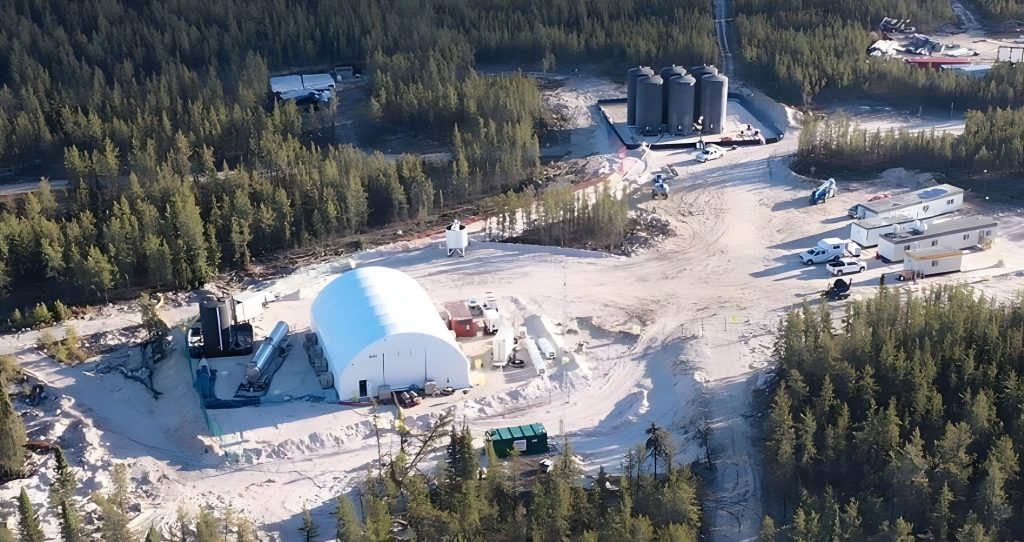
Denison Mines Corp. [DML-TSX] said it has received the final regulatory approval to construct the Pheonix-in-situ recovery uranium mine in Saskatchewan.
The company said the Canadian Nuclear Safety Commission has released the decision of its administrative tribunal approving the Environmental Assessment (EA) and issuing the License to Prepare Site & Construct Mine and Mill for the Pheonix deposit which is located on the company’s Wheeler River property.
With the EA having previously been approved by the Province of Saskatchewan, and other provincial approvals necessary to begin construction already received, federal approval of the EA and issuance of the licence represents the final regulatory approvals required to commence construction, the company said in a press release.
The announcement comes after Denison said it has awarded Wood Canada Ltd. a construction management contract to oversee the building of its Pheonix project. “This is a key milestone for the project and represents another crucial step towards commencement of construction,’’ the company said.
“The selection of Wood for construction management allows us to leverage our long-standing relationship with Wood’s Canadian team, which began with co-authoring the 2023 feasibility study for Pheonix and continued with the detailed design engineering for the project over the last two years,’’ said Denison CEO David Cates.
Denison Mines eased 1.1% or $0.06 to $5.33 on Thursday. The shares currently trade in a 52-week range of $5.97 and $1.58.
Wheeler River is the largest undeveloped uranium project in the eastern Athabasca region of northern Saskatchewan. The project is host to the high-grade Pheonix and Gryphon uranium deposits, discovered by Denison in 2008 and 2014, respectively, and is a joint venture between Denison (90% owner and operator) and JCU (Canada) Exploration Company Ltd. (holding 10%).
The company has said it is ready to make a final investment decision and start construction of the Pheonix In-Situ Recovery uranium mine. With all of the regulatory approvals received, uranium production is scheduled to start by mid-2028.
In 2023, Wood completed a feasibility study to evaluate the use of the ISR mining method and demonstrated robust economics.
In-situ recovery involves processing the uranium while it is still in the ground through the injection of catalyzing agents into the ore.
In-situ-recovery is only possible in porous geological formations (like sandstone) which are amenable to such a technique. On average, the capital spend needed to put an ISR uranium project into production is less than 15% of the cost to build a conventional hard-rock uranium mine.
Aside from the production cost, ISR leaves a much smaller environmental footprint because it does not require the construction of a tailings impoundment facility. Denison is aiming to be the first company to deploy the ISR method at a uranium project in Canada.